Command
Incident intelligence. Ahead of time.
LIVECOMMAND connects to your existing CAD and operational sources, continuously analyses every live incident and combines it with real-time context, so the right people can prepare before the situation demands them.
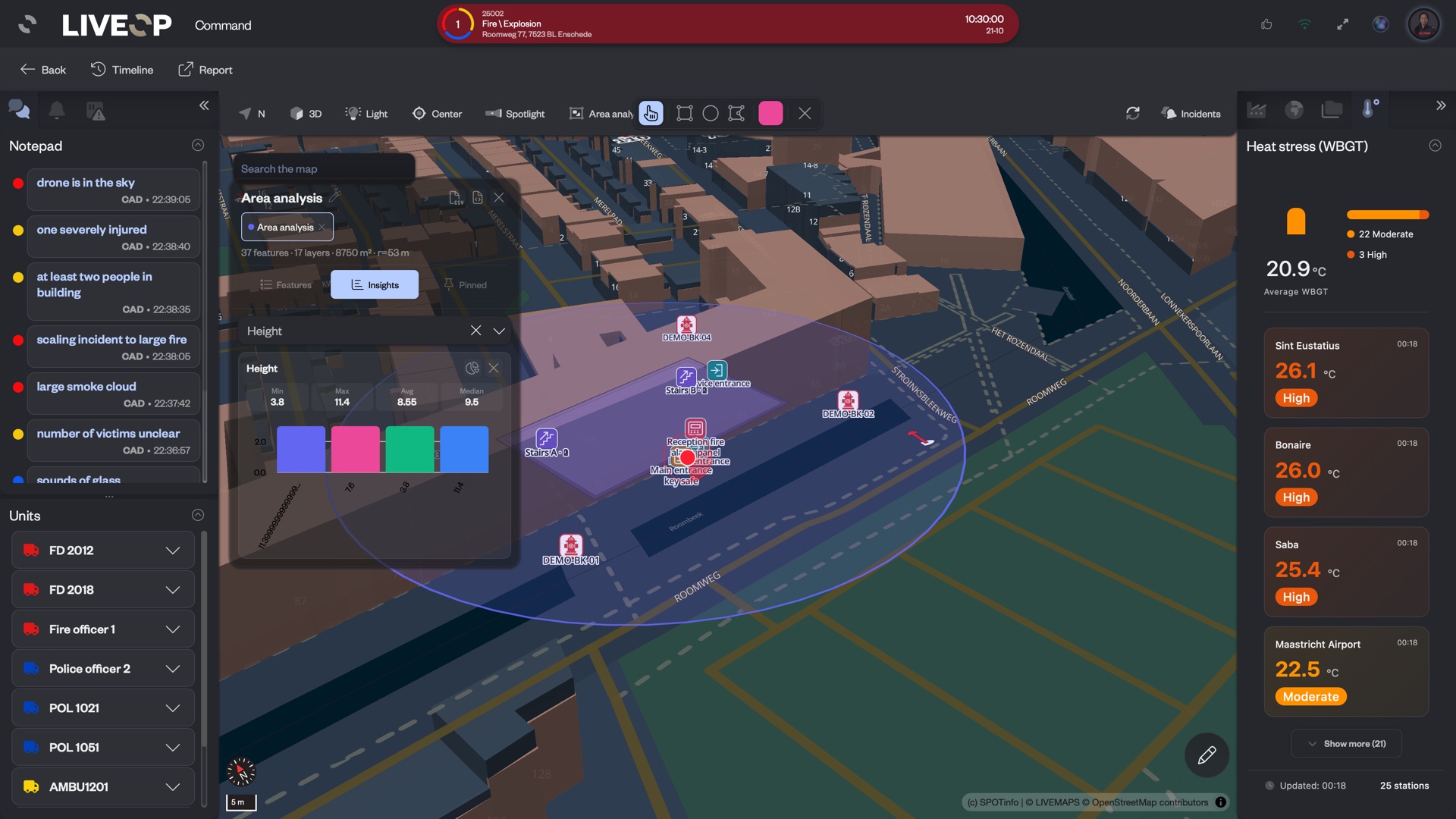
LIVECOMMAND keeps the operation ahead.
LIVECOMMAND connects to your existing CAD system rather than replacing it, strengthening the operational environment already in place. Live incidents and unit status enter from the control room, operational intelligence joins from the systems around it, and decisions move to units in the field while positions, messages and media flow back.
Your CAD keeps dispatching. LIVECOMMAND adds the intelligence layer.
Context turns incident data into operational intelligence.
Shared intelligence keeps every team ahead of what comes next.
“If only we had known sooner” should never follow an incident.
More information does not automatically create more control. LIVECOMMAND filters the noise, surfaces what needs attention and brings the relevant context into the operation while it can still change the outcome.
Less radio traffic. More calm. Immediate overview.
Instead of asking for updates, relaying information and rebuilding the situation over the radio, the room and the field see the same live incident picture. Everyone can find what they need without adding more noise to the operation.
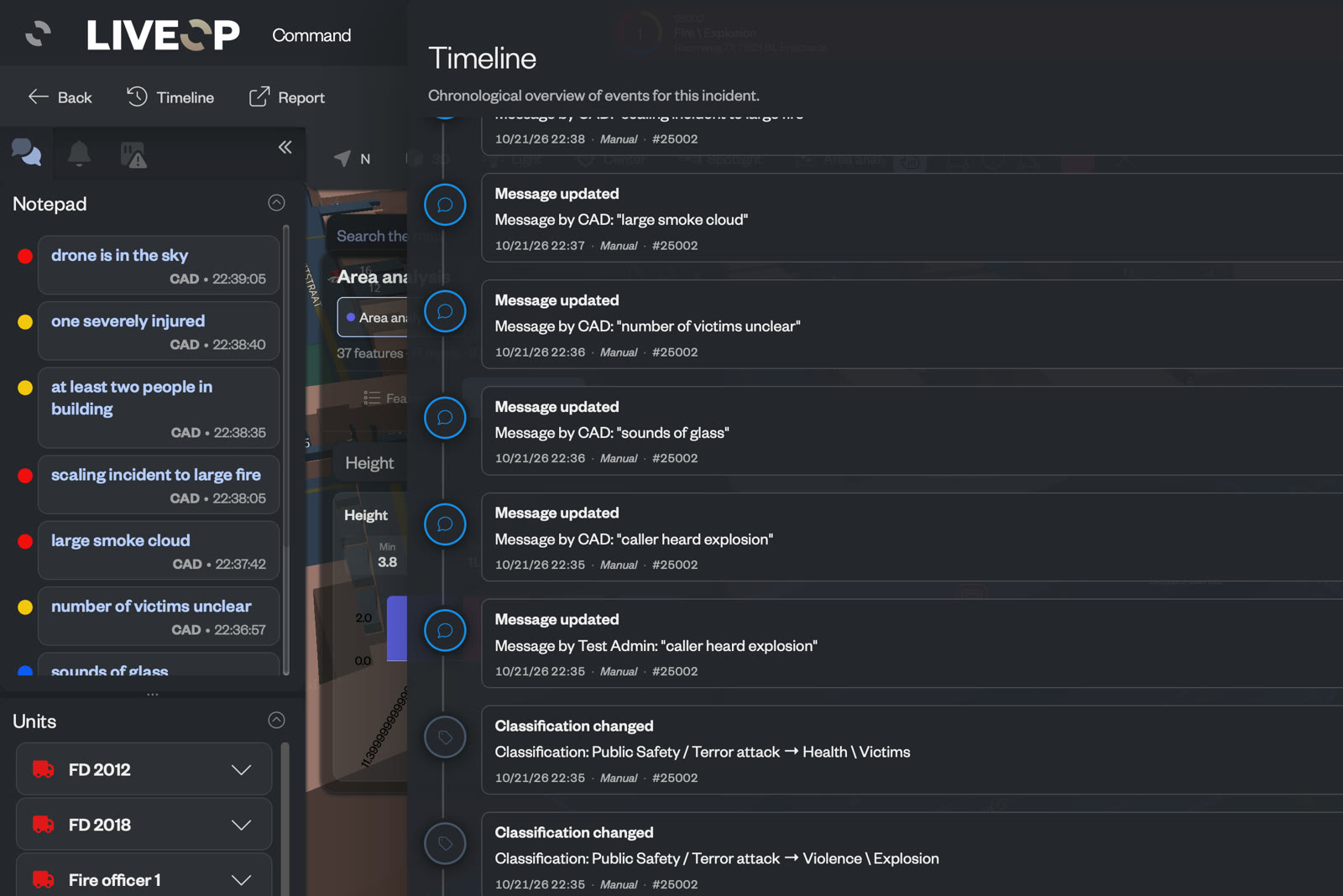
Focus on what matters now. Know when that changes.
While your team focuses on the incidents already demanding attention, LIVECOMMAND continuously monitors every active incident in the background. It combines new reports with operational context, so the right people can prepare ahead of time and deploy the moment the situation demands it.
Your priorities, built in.
LIVECOMMAND monitors the signals that matter to your organization, so its view of attention reflects how you actually operate.
See attention shift
When an incident develops, LIVECOMMAND brings it into view and shows how its attention level changed over time.
Bring the right people in, right when they’re needed.
When an incident crosses a relevant threshold, LIVECOMMAND immediately alerts the people who need to know, so they can join the operation without delay.
See which signals contributed, how the situation developed and why the incident was brought forward. Operators keep the context, judgment and final decision.
From an area on the map to a field-ready brief. In seconds.
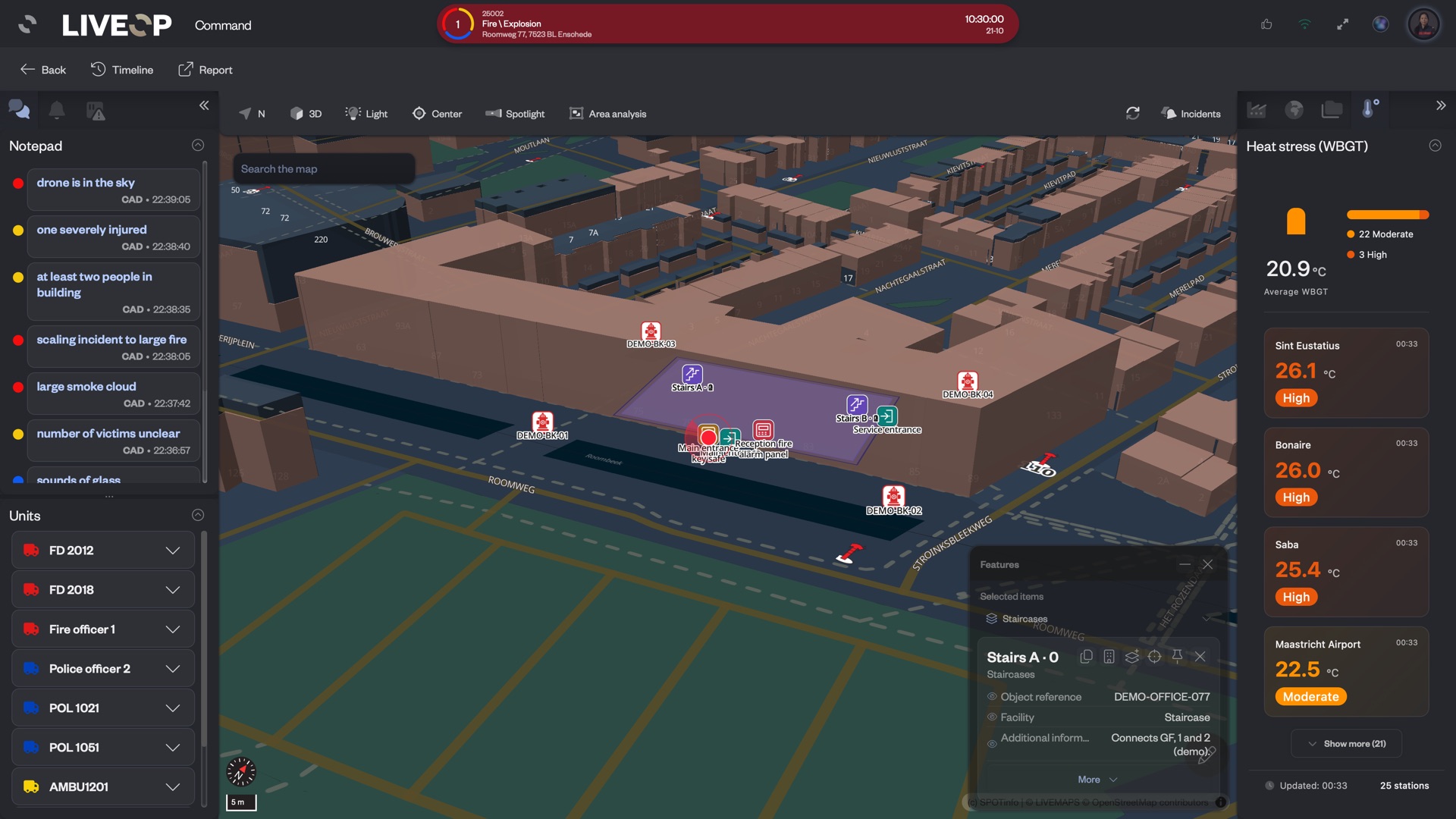
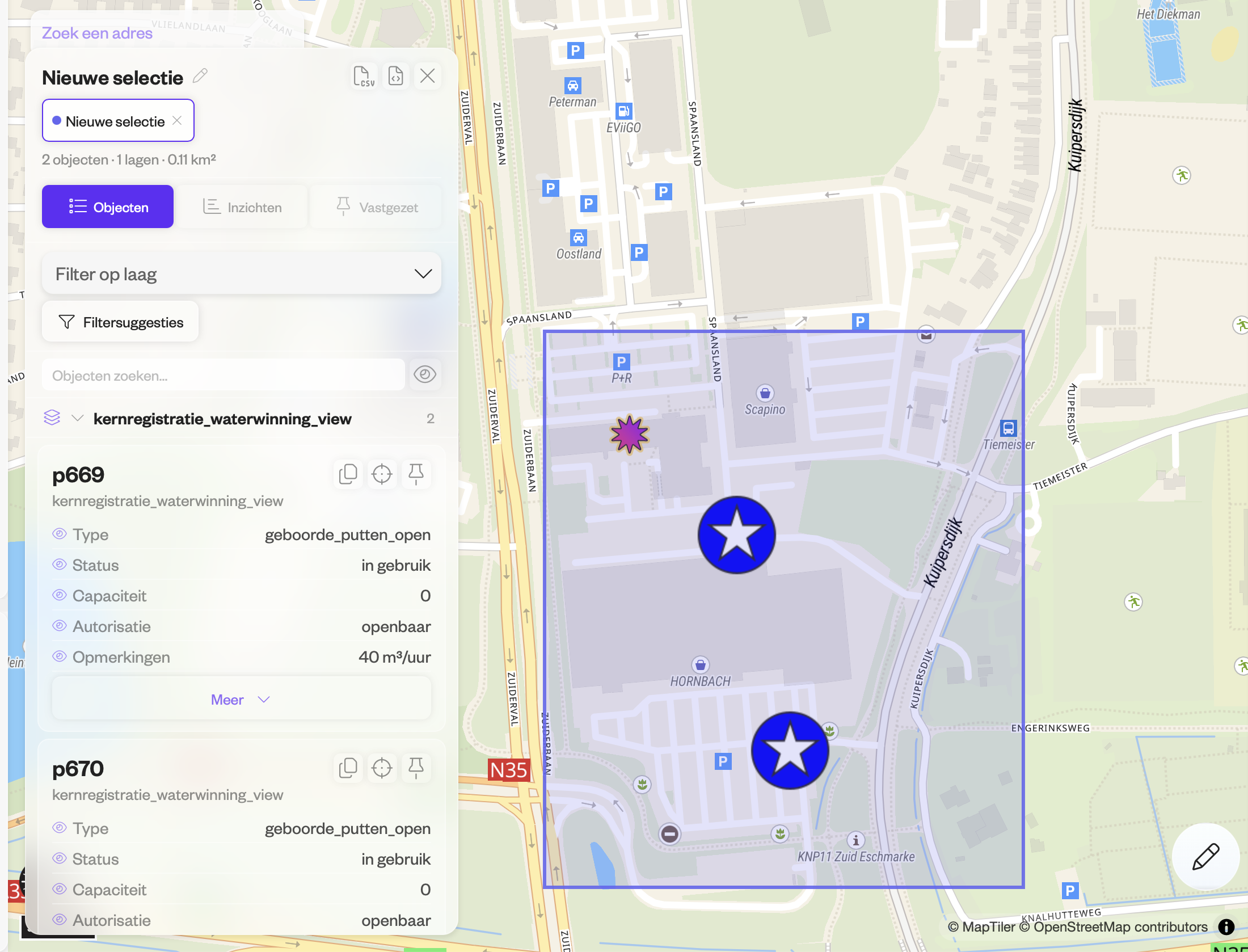
Draw around the incident and LIVECOMMAND analyses the connected geographic data for that exact area. Build focused views for hazardous materials, vulnerable populations, water supply or any other operational question, then share a clear summary with officers and responders in the field.
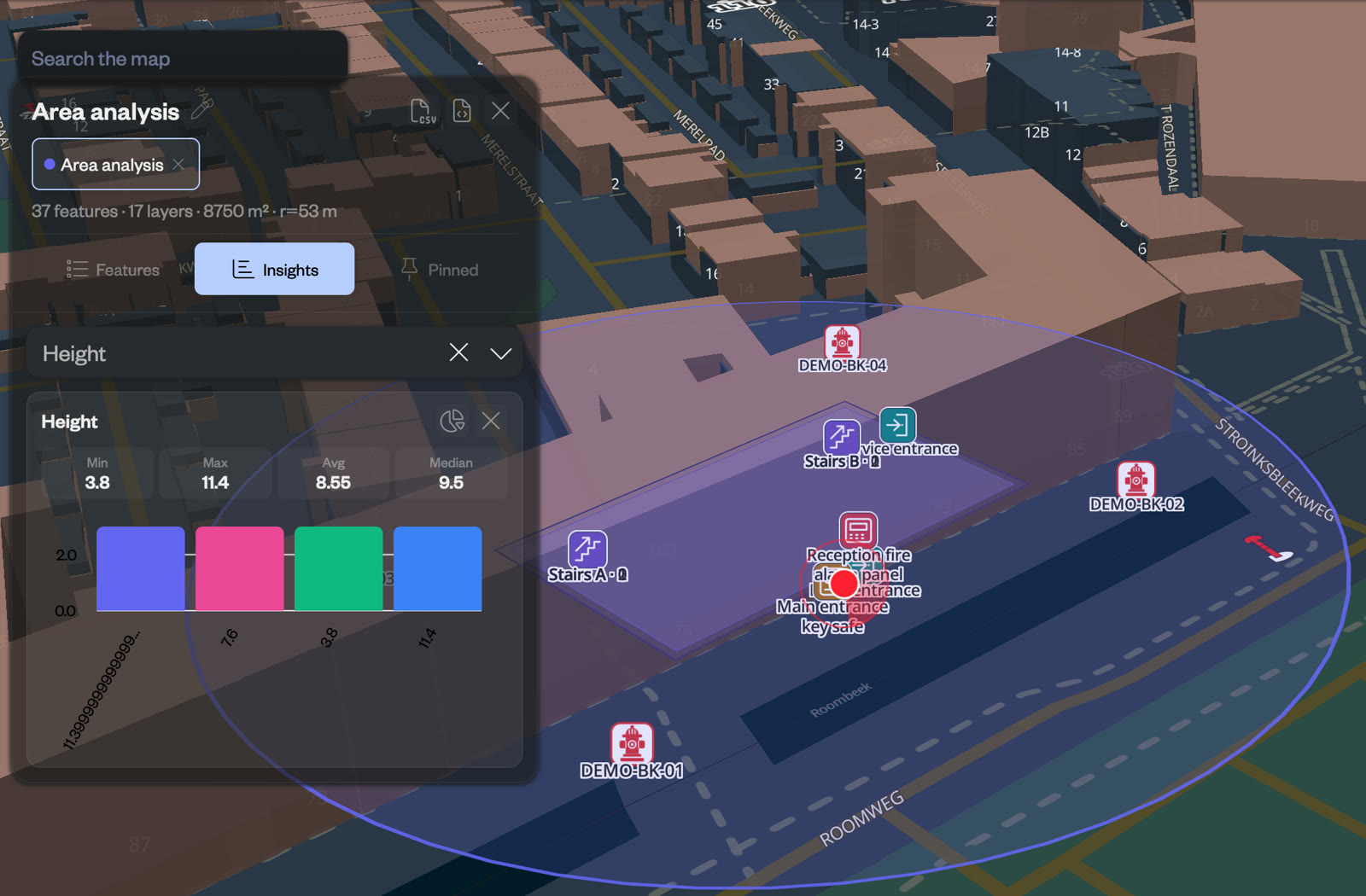
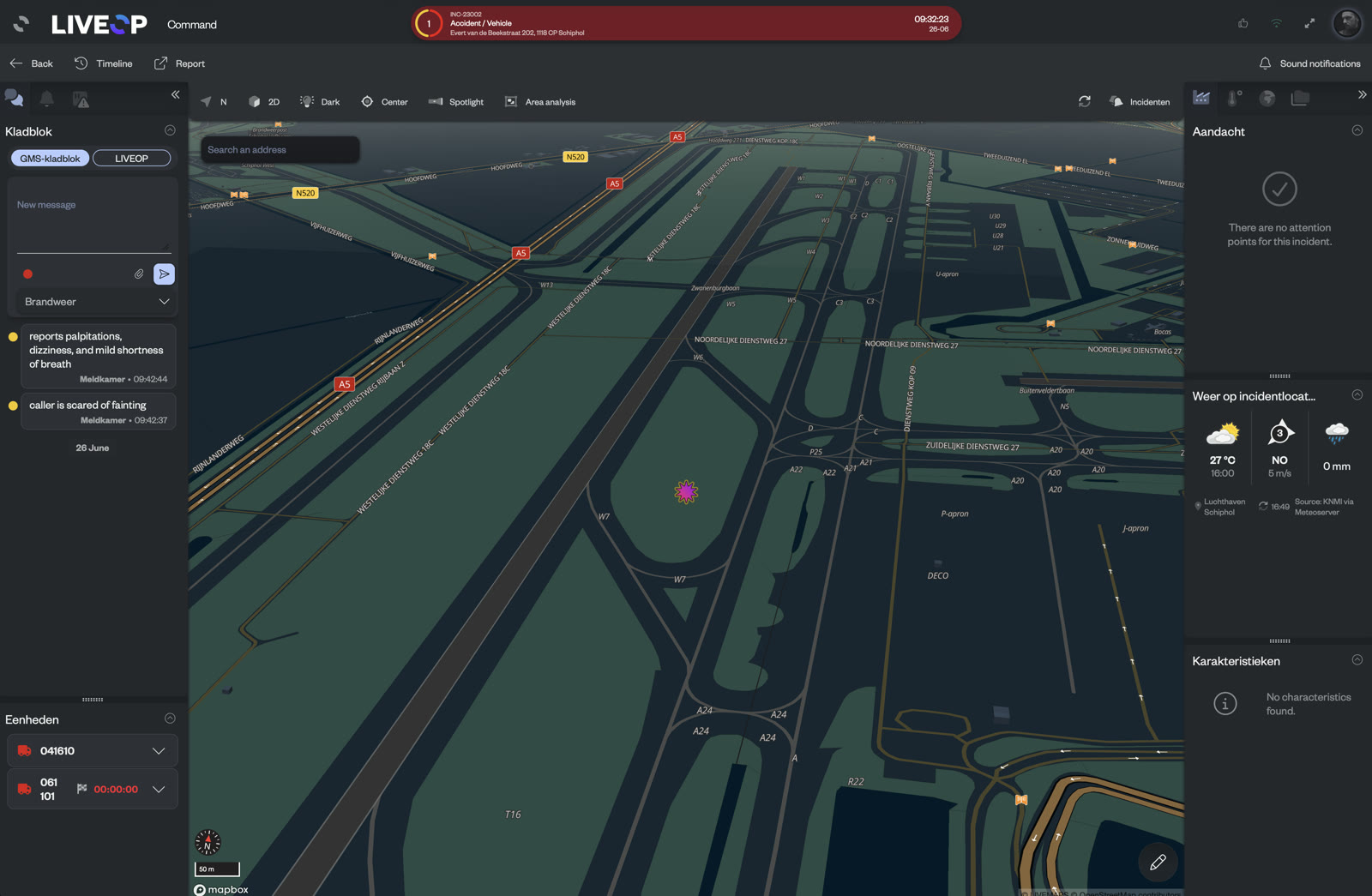
Read the scene from every angle.
Move from a flat incident marker to a three-dimensional understanding of the building and its surroundings. Combine 3D geo data, street-level imagery and live operational positions to assess scale, access and exposure before crews arrive.
Get the decision to the field, and the field back into the picture.
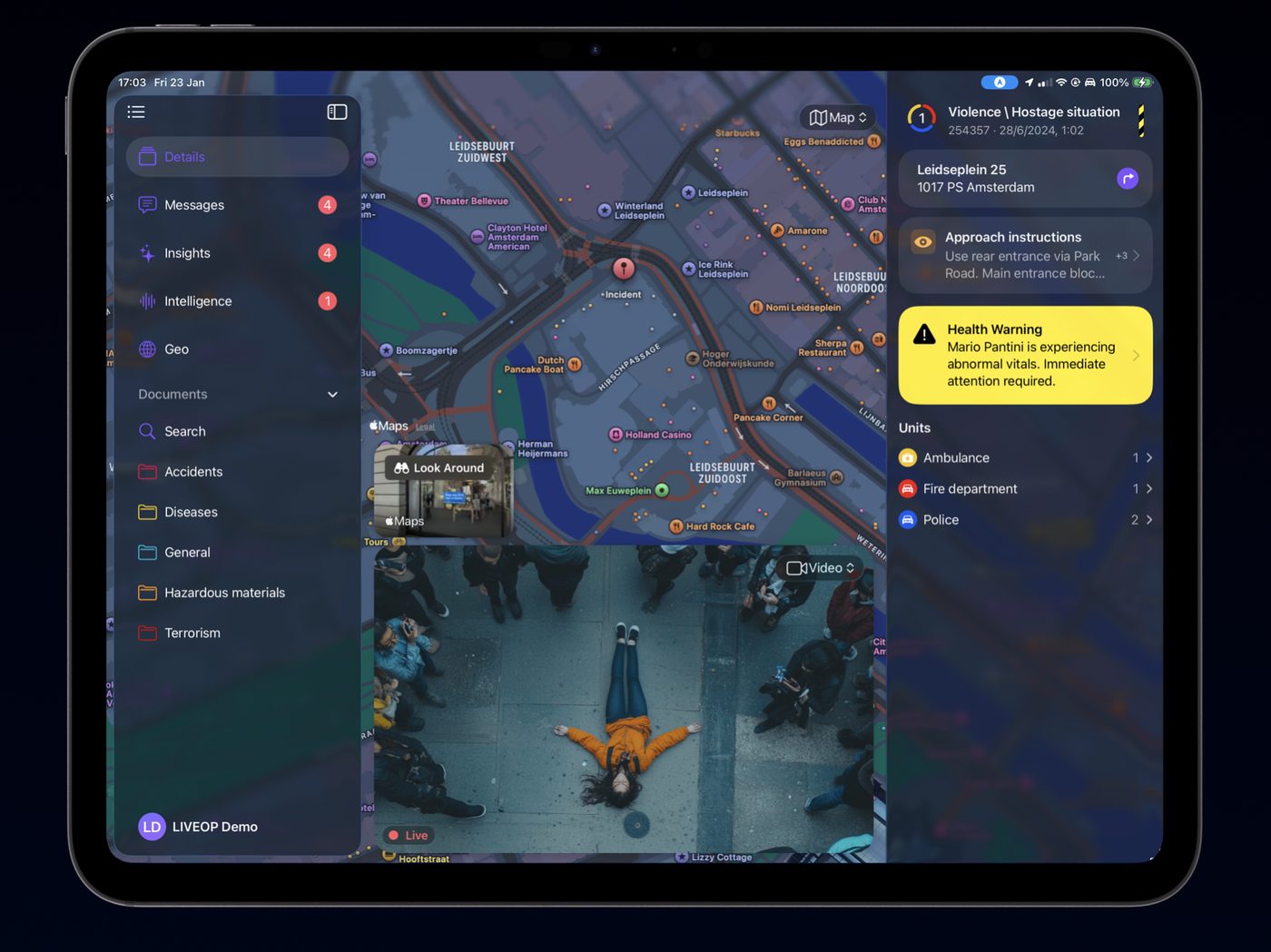
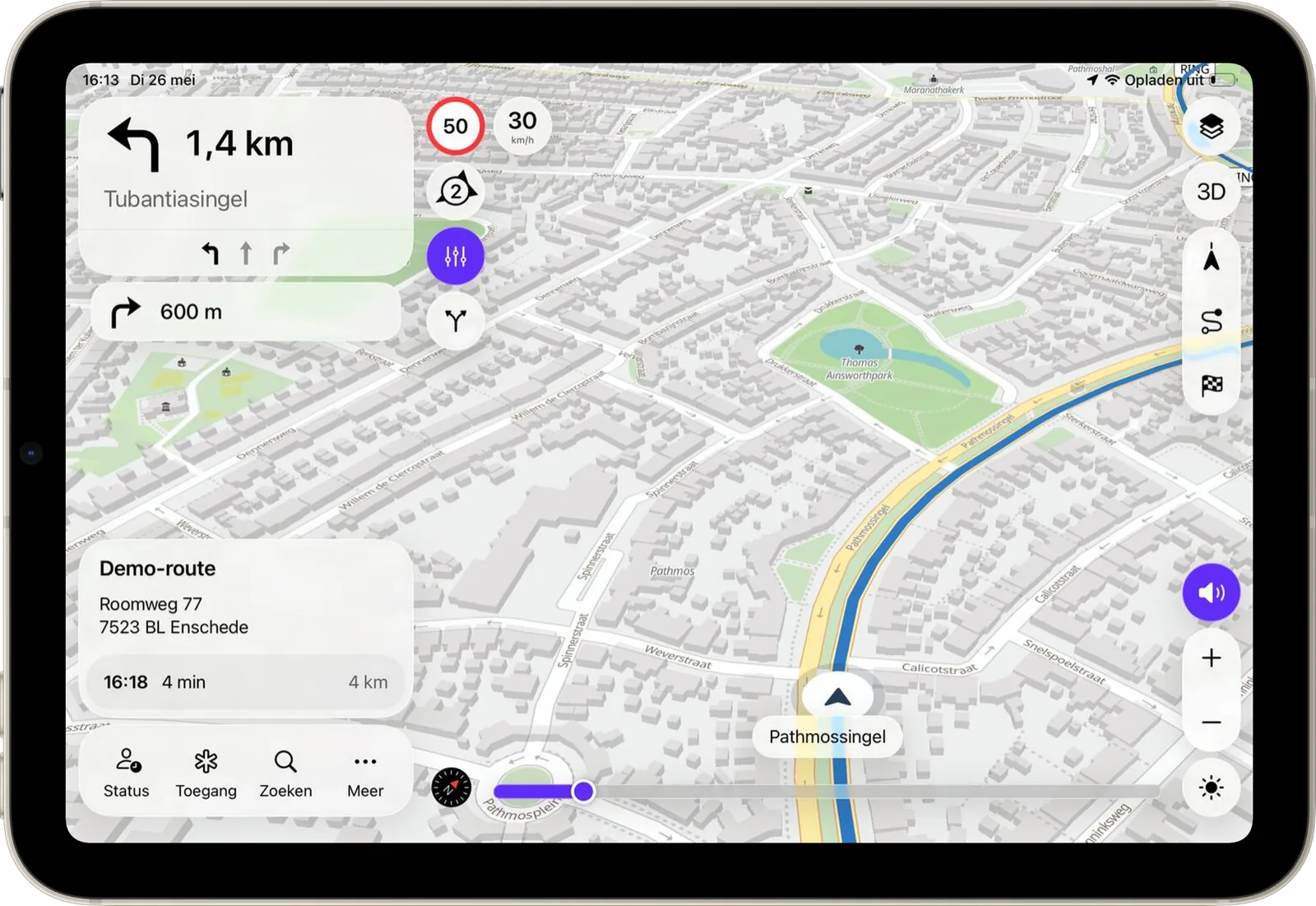
Share intelligence, decisions and precise destinations directly inside the incident. Updates, photos and video return from the field in the same context, reducing radio relay and giving the room a calmer, continuously updated operational picture.
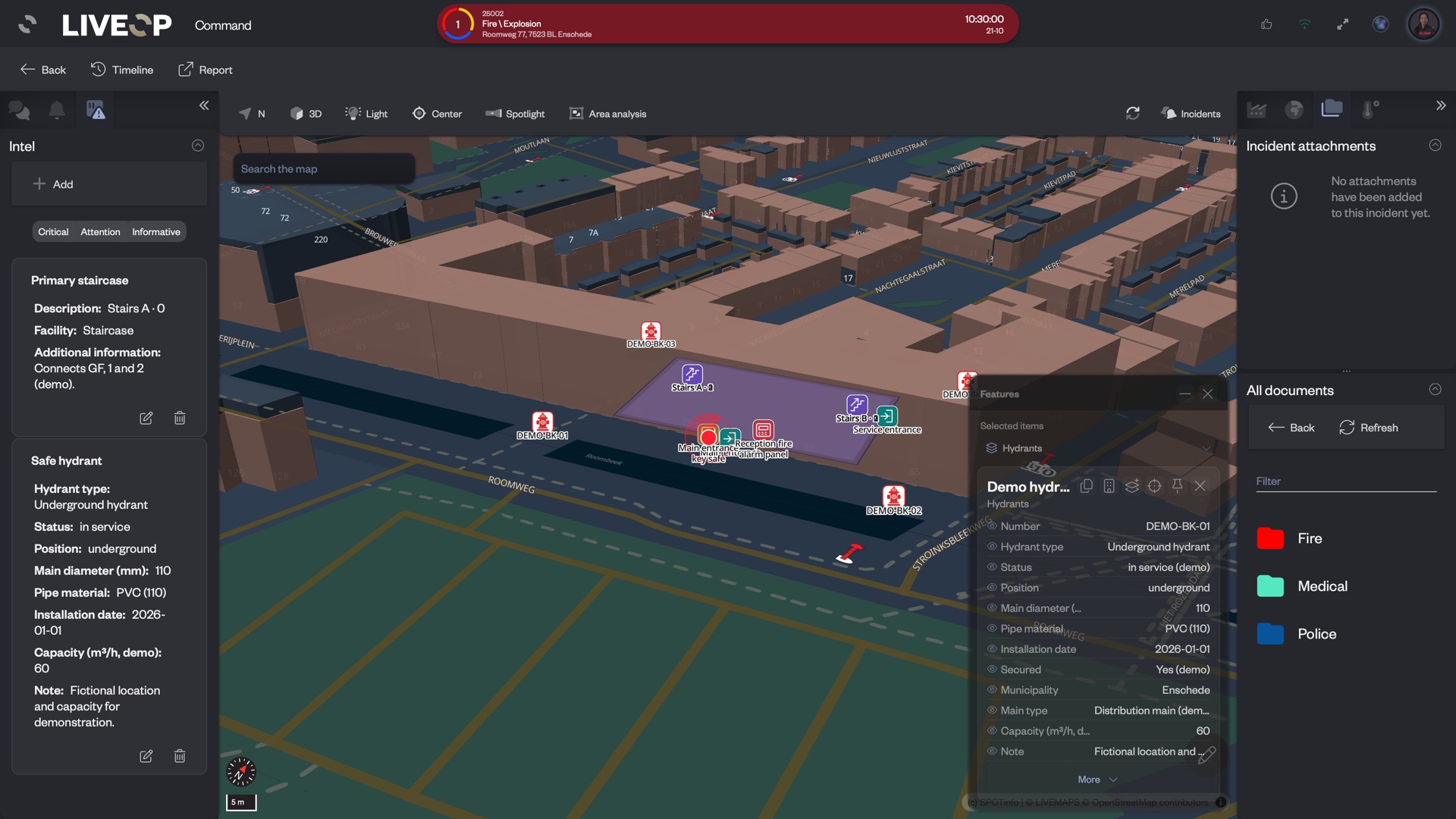
Keep every exchange secure, governed and accountable.
Public-safety communication needs to be secure and accountable by design. LIVECOMMAND keeps operational communication inside an authorized environment and makes activity traceable from the first update through handover and review.
Secure operational communication
Keep messages, media and decisions tied to the incident and available only to authorized users, instead of relying on consumer messaging channels.
Security by design
Role-based access, Content Security Profiles, regional hosting and cloud-security controls aligned with ISO/IEC 27001 and ISO/IEC 27017 protect sensitive operational information and support organizations in meeting their NIS2 obligations.
A full audit trail by design
Maintain a complete, timestamped trail of incident events, status changes, messages, media, scoring and alert delivery for accountability, GDPR obligations and post-incident review.
Every incident leaves a pattern.
Over time, those patterns show where pressure builds, when it returns and how it moves. LIVECOMMAND makes that visible, so teams can prepare earlier and plan with evidence.
See where pressure builds.Reveal the places and times that repeatedly put the most pressure on the response.
Understand what is changing.See whether demand is growing, moving or returning in a familiar pattern.
Prepare for what comes next.Use what actually happened to improve coverage, readiness and prevention.
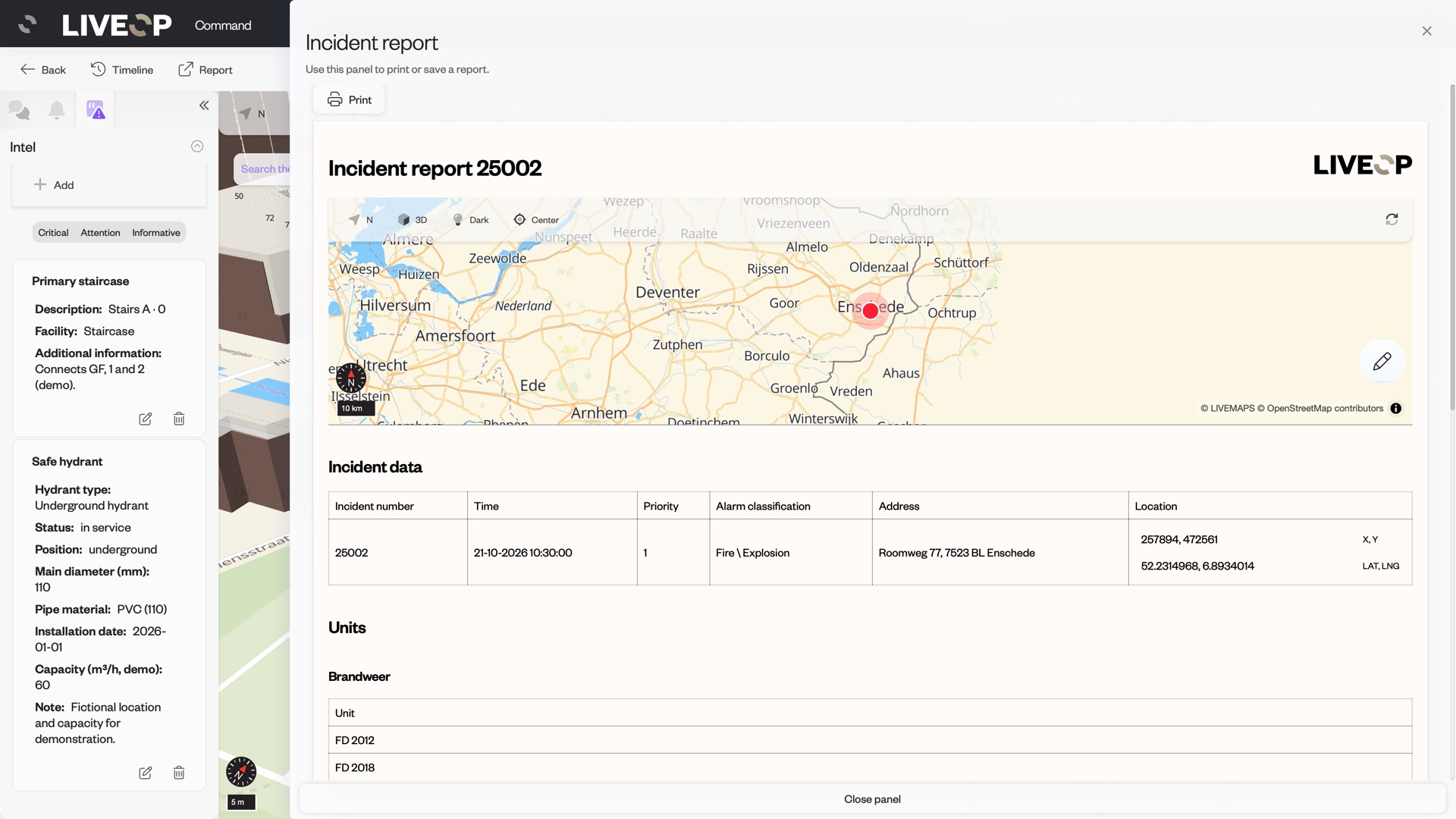
The incident ends. Its story stays complete.
Every update, decision, message and image remains connected to the incident. When it closes, the report is ready, so handover and review begin with the full picture.
Hand over without retelling it.The next team sees what changed, what was decided and what still needs attention.
Review the whole incident.A clear timeline and automatic report bring the operation back together in order.
Answer questions later.The record remains available when accountability or learning matters months later.
Built for public-safety operations that cannot pause.
An intelligence layer, without a systems overhaul.
LIVECOMMAND works with the operational technology and geographic sources already in place.
- Access
- Runs in every current modern browser, without dedicated client software.
- CAD integration
- Connects through available APIs, database connections or other supported interfaces. Your CAD remains the source system.
- Geospatial data
- Supports vector, raster, WMS, WFS, WMTS, XYZ, ArcGIS REST, GeoJSON and supported 3D tile sources.
What teams want to know.
Does LIVECOMMAND replace our CAD system?
How do you prevent attention alerts from becoming noise?
Who is LIVECOMMAND for, and does everyone see the same thing?
Can multiple organizations collaborate without sharing everything?
How does intelligence reach teams in the field?
What evidence is available after an incident?
Can we validate attention scoring before alerts go live?
Bring us a night your room still talks about.
We will use a familiar incident pattern and the sources your team relies on to show where LIVECOMMAND fits, what it brings into view and how the room gets a decision to the field.